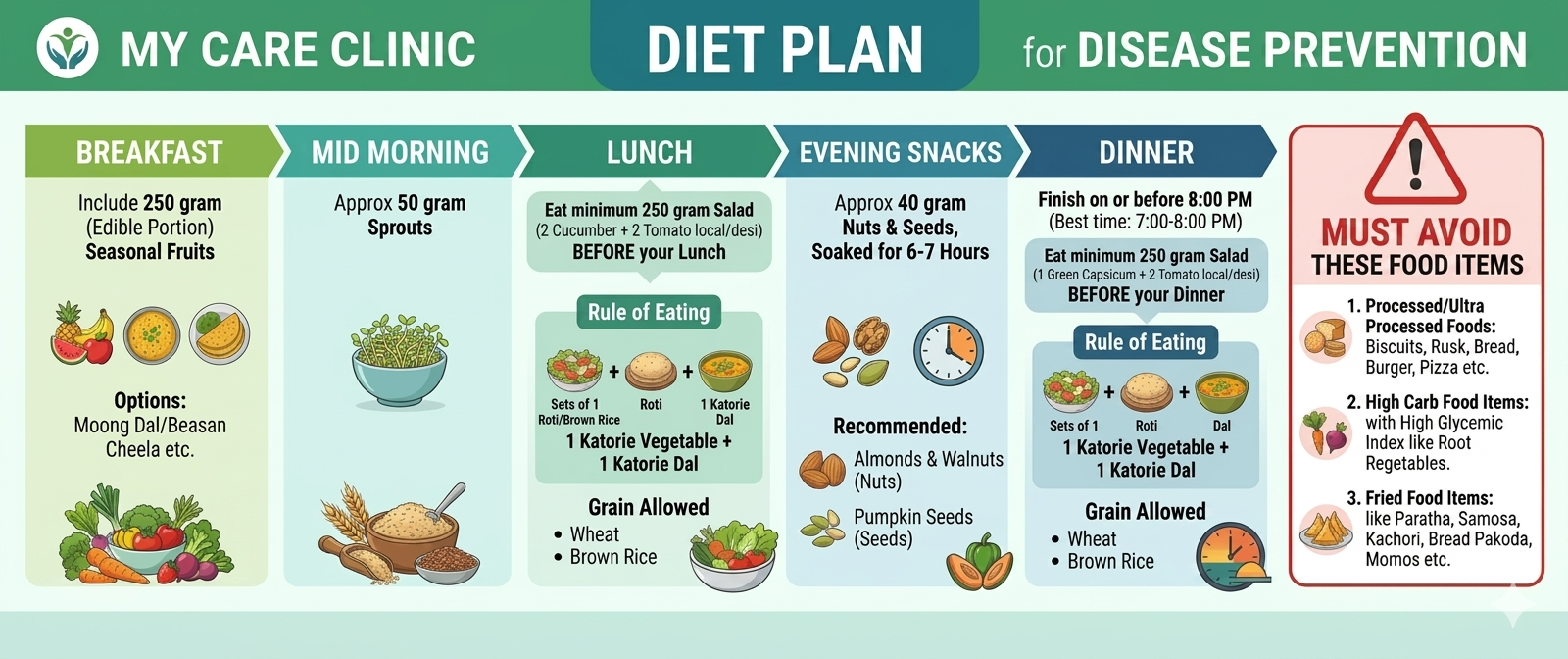
A Simple, Practical & Scientifically Designed Diet Plan
At My Care Clinic, we understand that most people struggle with complicated diet charts. That’s why we created the My Care Diet Plan — a simple, easy-to-follow, and sustainable eating pattern that fits naturally into your daily Indian lifestyle. This is the best diet plan for diabetes, best diabetic diet chart, also blood sugar control diet, healthy Indian diet for weight loss, simple diabetes diet plan, and diabetic food chart
This plan focuses on portion control, right food combinations, and correct meal timing to help you:
- Control blood sugar levels
- Reduce weight (if needed)
- Improve energy and digestion
- Prevent long-term complications
Breakfast – Start Light, Stay Energetic
Your breakfast should be light, natural, and rich in fiber.
What to Take:
- 250 – 500 grams of seasonal fruits (apple, papaya, guava, orange, etc.) OR
- Protein-rich options like:
- Moong Dal Cheela with Green Vegetables
- Besan Cheela with Green Vegetables
Why This Works:
Fruits provide natural sugar with fiber, which releases energy slowly.
Dal-based options add protein, keeping you full and preventing sudden sugar spikes.
Mid-Morning – Control Hunger Smartly
Many people feel hungry between breakfast and lunch. Instead of unhealthy snacks:
What to Take:
- 50 grams sprouts (moong, chana, etc.)
Why This Works:
Sprouts are rich in protein, fiber, and micronutrients, helping maintain stable blood sugar and reducing cravings.
Lunch – The Balanced Plate Formula
Lunch should be balanced, filling, and controlled in quantity.
Step 1: Start with Salad (Very Important)
- 250 grams raw salad (Example: 2 Cucumbers & 2 Tomatoes)
Eating salad first reduces hunger and prevents overeating.
Step 2: Follow the “My Care Plate Rule” (Rule of Eating)
Eat Sets of
- 1 Roti or Small Portion of Brown Rice + 1 Bowl Cooked Vegetable + 1 Bowl Dal
Allowed Grains:
- Wheat (Roti) & Brown Rice
Why This Works:
This combination ensures:
- Controlled carbohydrates, Adequate protein, High fiber intake
It helps maintain steady blood sugar levels after meals.
Evening Snack – Healthy Energy Boost
Evening is the most common time for unhealthy eating. Replace junk food with:
What to Take:
- 40 grams nuts & seeds (soaked 6–7 hours)
Recommended Options:
- Almonds (6-7), Walnuts (2) & Pumpkin Seeds (2-3 Table Spoon)
Why This Works:
These provide healthy fats and protein, which:
- Reduce hunger, Improve heart health & Prevent sudden sugar spikes
Dinner – Eat Early, Eat Light
Dinner timing is crucial for diabetes control.
Important Rule:
- Finish dinner before 8:00 PM (Ideal: 7:00 – 8:00 PM)
Step 1: Start with Salad
- 250 grams salad (Example: 1 Green Capsicum & 2 Tomatoes)
Step 2: Follow the Same Plate Rule (Rule Of Eating)
Eat Sets of
- 1 Roti or Brown Rice + 1 Bowl Vegetable + 1 Bowl Dal
Why This Works:
Early and light dinner helps:
- Improve digestion, Prevent night-time sugar spikes & Supports better sleep and metabolism
Foods to Avoid – The Most Important Step
Even the best diet will fail if these foods are not controlled.
1. Processed & Packaged Foods
- Biscuits, bread, burgers, pizza, packaged snacks
These contain refined flour, sugar, and unhealthy fats
2. High Glycemic (High Sugar-Raising) Foods
- Refined carbohydrates like white sugar, sugar syrups
- Excess root vegetables (like potatoes)
These cause rapid spikes in blood sugar
3. Fried Foods
- Paratha, samosa, kachori, bread pakoda, momos etc.
These increase weight, cholesterol, and insulin resistance
Key Principles of My Care Diet Plan
This plan is not just about food—it’s about healthy habits:
- Eat salad before meals
- Follow portion control (1 roti rule)
- Prefer home-cooked, fresh food
- Avoid junk and processed foods
- Eat on time, especially early dinner
- Choose natural, simple foods over complex diets
Why My Care Diet Plan is Different
- Simple and easy for daily life
- Based on Indian eating habits
- No complicated calorie counting
- Focus on long-term sustainability
- Suitable for diabetes, weight loss, and overall health
Frequently asked questions
- The My Care Diet Plan is a simple and practical Indian diet plan designed to improve overall health, maintain ideal body weight, increase energy, and help control conditions like diabetes, obesity, high cholesterol, and fatty liver through healthy eating habits and lifestyle changes.
- Yes. This plan focuses on balanced meals, high-fiber foods, portion control, and avoiding refined sugar and processed foods, which can help support better blood sugar control.
- Yes. The My Care Diet Plan encourages natural, nutrient-rich foods, early dinners, controlled portions, and reduced junk food intake, which may help in healthy and sustainable weight loss.
A healthy breakfast may include:
- Seasonal fruits
- Moong dal cheela
- Besan cheela with vegetables
- Sprouts
- Oats
- Coconut water
- Herbal tea without sugar
Breakfast should be light, nutritious, and rich in fiber and protein.
You should try to avoid or limit:
- Sugary drinks
- Refined sugar
- Fried foods
- Fast food
- Processed snacks
- Bakery products
- Excessive salt
- Alcohol and smoking
- Eating dinner early helps improve digestion, supports better sleep, may help in weight management, and can assist in better blood sugar control.
- Most adults should aim for around 2–3 liters of water daily, depending on weather, activity level, and medical conditions.
- Yes. Whole fruits in moderate quantities are generally better than fruit juices because fruits contain fiber that helps slow sugar absorption.
- Yes. Along with this diet plan, simple physical activities like walking, yoga, stretching, and regular movement can provide significant health benefits.
- In many cases, yes. However, dietary needs may vary depending on the thyroid condition, medications, and other health issues. Personalized guidance is always better.
- Yes. The My Care Diet Plan is largely based on Indian vegetarian foods such as fruits, vegetables, pulses, sprouts, salads, nuts, seeds, and whole grains.
- A healthy, fiber-rich diet with less processed food and better weight control may help improve cholesterol levels and support liver health.
A healthy plate may include:
- 50% salad and vegetables
- 25% protein sources like dal, sprouts, paneer, or pulses
- 25% whole grains like roti, brown rice, or millets
- Most people benefit from eating balanced meals at regular intervals while avoiding overeating, frequent snacking, and late-night eating.Toggle Content
- Yes. Personalized diet and lifestyle guidance can be provided based on age, weight, medical conditions, lifestyle, and health goals through My Care. You can contact +91 90700 30600 for further details.
For more information on health planning Click here